



Casting Wrinkling Defect: Identification, Causes and Prevention
2026-09-19 11:02I. What is wrinkling
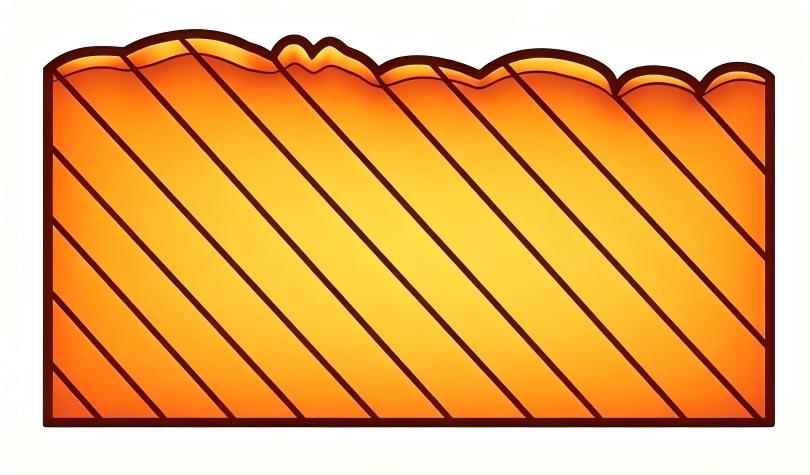
Wrinkling is a special surface scar defect of castings. It appears as irregular coarse-grained or ridged scars on the casting surface, usually accompanied by deep network grooves. This defect commonly occurs on the upper surfaces and vertical faces of thin-wall alloy steel castings containing easily oxidizable elements such as chromium, silicon and manganese, upper surfaces of heavy-wall ductile iron castings, inner walls of centrifugally cast ductile iron pipes, and upper surfaces of magnesium alloy castings with drastic section changes.
II. How to identify wrinkling
On-site identification relies on visual inspection, and this defect can be easily distinguished from other surface defects. Wrinkling with deep network grooves is unique to ductile iron and magnesium alloy castings. It can be differentiated from ordinary wrinkling according to the alloy type.
III. Formation mechanism of wrinkling
Compounds (oxides, sulfides, silicates, etc.) formed during magnesium treatment of magnesium ductile iron are dispersed in molten metal in the form of thin films. They float slowly in the ladle, enter the mold with molten metal during pouring, and rise to the upper surface of the casting. For centrifugal casting, they accumulate on the inner wall of castings.
Magnesium alloy is highly susceptible to oxidation. Without effective protection during melting and pouring, a thick oxide film will form on the surface of molten metal and flow into the mold cavity together with molten metal. When the flow channel narrows from wide to narrow inside the mold, oxide films gather on the upper surface of the casting and form wrinkling.
Easily oxidizable elements in alloy steel undergo oxidation during pouring and mold filling.
General wrinkling is caused by high viscosity of molten metal, low pouring temperature, excessively slow pouring speed, metal oxidation during pouring, gas generated by reaction between molten metal and mold wall, and excessively low mold temperature of metal molds.
IV. Effective prevention of wrinkling
Use high-quality raw materials for melting ductile iron, reduce sulfur content, gas and inclusions in the original molten iron. Reduce magnesium addition on the premise of ensuring spheroidization. Adjust carbon content and carbon equivalent of molten iron, appropriately increase spheroidizing temperature and strengthen inoculation treatment to reduce viscosity and improve fluidity of molten iron. Adopt ladles with good slag retention effect. Keep molten iron standing in the ladle for sufficient time before pouring to allow slag and inclusions to fully float up.
Melt and pour magnesium alloy under protective atmosphere to prevent oxidation of molten metal. The pouring position and gating system shall be designed to ensure molten metal fills the mold cavity rapidly and smoothly and shorten the filling path. Vacuum suction casting can be adopted.
Pour alloy steel containing easily oxidizable elements under reducing or neutral atmosphere.
Adjust alloy composition to improve fluidity, appropriately raise pouring temperature and pouring speed to avoid metal oxidation during pouring. Optimize sand and coating composition to prevent chemical reaction between mold wall and molten metal. Keep molten metal standing in the ladle for enough time and strengthen slag retention. Appropriately increase the temperature of metal molds for metal mold casting.
Install filters and slag traps in the gating system to intercept slag and oxide films.
Wrinkling defects are mostly caused by accumulation of oxide films and slag as well as insufficient fluidity of molten metal. The formation mechanisms of wrinkling vary for castings of different materials. Through raw material control, melting protection, gating system optimization and adjustment of process parameters, wrinkling defects can be effectively reduced and the surface quality of castings stabilized.