With the continuous development of industrial technology and production processes, as well as the intensification of global market competition, especially since joining the WTO, the machinery manufacturing industry and engineering circles have increasingly higher requirements for casting quality, especially casting surface quality. Casting coating refers to a covering applied to the surface of mold cavity or core to improve its surface refractoriness, chemical stability, resistance to metal scouring, resistance to sand adhesion and other properties. Casting coating is closely related to the surface quality of castings. Xinda will discuss the impact of casting coating on the surface quality of castings from the aspects of the role and performance of casting coating.
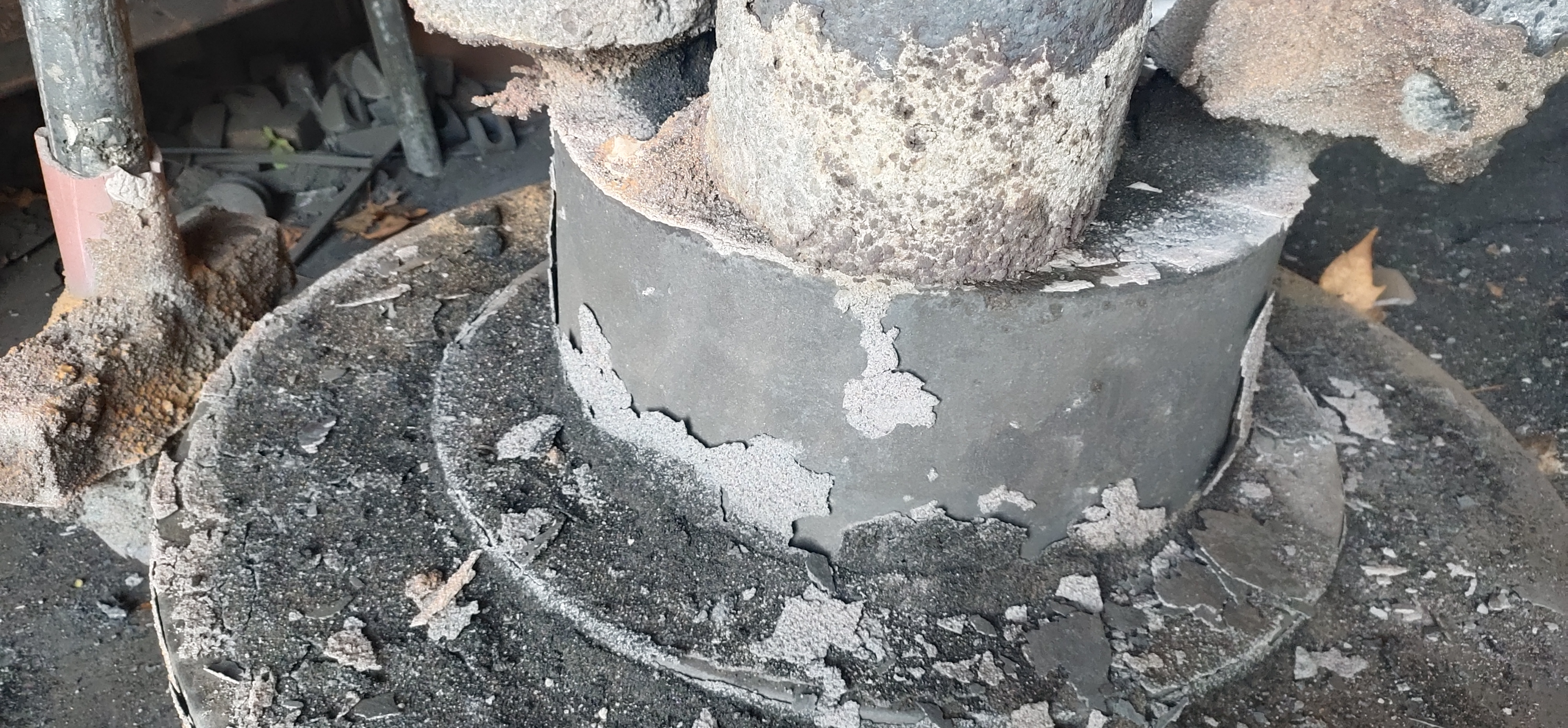
I. The Role of Coatings
1. Reduce Mechanical Sand Adhesion and Chemical Sand Adhesion on Casting Surfaces
Molds and cores have many pores. During the casting and solidification process, the molten metal with static pressure and dynamic pressure will penetrate into the pores, forming a hard-to-clean metal sand shell adhering to the casting surface, which is called "mechanical sand adhesion". The application of casting coating can seal the pores between the sand particles on the surface layer of the mold and core, block the channel of molten metal penetration, and reduce the mechanical sand adhesion of castings. At casting temperature or lower, the surface of molten steel will continuously generate a metal oxide film, which can chemically react with silica sand, leading to "chemical sand adhesion" on the casting surface. The use of casting coating can isolate the molten metal from the surface of the mold or core, inhibit the chemical reaction between them, and reduce or eliminate the chemical sand adhesion on the casting surface.
2. Reduce Sand Inclusion and Sand Flushing on Casting Surfaces
During the casting process, the high-temperature molten metal has a strong thermal radiation effect on the surface of the mold and core. The thermal pressure and hot wet tensile strength generated by the heated mold and core will lead to sand inclusion in castings. Casting coating can slow down the radiant heating of the mold or core, thereby reducing or eliminating the occurrence of sand inclusion defects. Coatings with a certain bonding capacity can also penetrate between the sand particles on the surface layer of the mold and core, thereby enhancing the surface strength and scouring resistance of the mold or core, and reducing the sand flushing defects of castings.
3. Improve the Surface Performance and Internal Quality of Castings
By adding thermal insulation materials and chilling materials to the coating, it can improve the temperature distribution in the mold cavity and control the solidification and crystallization process of the alloy, thereby reducing the occurrence of cold cracks and hot cracks on the casting surface. Adding certain inoculants or alloying elements to the coating can also achieve local inoculation or surface alloying, so as to improve the metallographic structure and performance of castings.
II. The Performance of Coatings
1. Suspension Stability
During storage or use, the solid particles of the coating should be as suspended as possible, without stratification, precipitation or agglomeration, to ensure the uniformity of coating performance and coating quality.
2. Brushability
The service performance of a coating with good brushability is: when the brush is fully dipped in the coating for brushing, it is smooth, non-sticky and does not carry sand particles; after brushing, the coating can automatically level without brush marks, and no coating loss occurs on the vertical surface of the cavity.
3. Permeability
High-quality coatings should have the performance of penetrating to an appropriate depth of the mold and core. Generally, the penetration depth is required to be 2-3 times the diameter of the sand particles. The penetration of the coating into the sand mold pores can also enhance the affinity between the sand particles.
4. Surface Strength
The ability of the coating to leave no marks or lose powder after being scratched or brushed by external force after curing is called the surface strength of the coating. Sufficient surface strength can prevent mold damage during handling, core setting and mold closing. A good coating should also have good sand adhesion resistance, crack resistance, preservation and a small amount of gas generation.
III. The Principle of Casting Coating Affecting Casting Surface Quality
1. Air Film and Carbon Film Isolation
Graphite powder coating has good peelability when used for iron castings. During casting, solidification and cooling, graphite generates carbon monoxide gas film and bright carbon film, which prevent the interaction between molten metal and the surface of the mold or core, and prevent sand adhesion. Spraying a coating made by mixing waste engine oil and graphite powder on the surface of the wet mold cavity can obtain thin-walled iron castings with extremely smooth surfaces by virtue of the reducing gas film and carbon film generated by the high temperature of casting.
2. Slag Isolation
After casting, a slag layer is formed at the interface between the coating layer and the casting, which has high viscosity to bond the refractory aggregate together and block the penetration of molten metal. The slag layer has the best effect when it does not produce chemical reaction with silicate in the molten metal and is not wetted or basically not wetted by the molten metal. During cooling, the linear shrinkage coefficient of the slag shell layer is quite different from that of the casting metal, and a large shear stress is generated at the interface between the slag shell layer and the casting, leading to automatic peeling of the coating shell. This theory of preventing sand adhesion by using the slag layer is called "slag isolation theory". Coatings formulated with reactive metals and metal oxides can generate a new refractory oxide through thermal reaction, which can prevent the penetration of molten metal.
3. Oxidation
Whether the casting adheres to sand depends on whether there is a critical thickness of iron oxide layer between the casting and the coating layer, whose thickness is about 100μm. To prevent chemical sand adhesion, the thickness of the oxide should be increased. When it exceeds the critical thickness, the sintered layer of the coating or molding sand and metal oxide is easy to peel off from the casting. When casting steel parts in limestone sand mold, the following reaction occurs: CaCO3=CaO+CO2, leading to a strong oxidizing atmosphere inside the mold cavity, which intensifies the surface oxidation of steel castings, so limestone sand has excellent sand adhesion prevention effect.
Having been deeply engaged in the field of casting coatings for many years, Xinda Coatings has always focused on casting quality, creating high-quality coating products suitable for various steel castings, iron castings and non-ferrous metal castings. Relying on a professional R&D team, Xinda Coatings optimizes the formula design, selects high-purity refractory aggregates, and has excellent suspension stability, brushability and permeability. After curing, the coating has high surface strength and good crack resistance, which can effectively eliminate common defects such as mechanical sand adhesion, chemical sand adhesion and sand inclusion. At the same time, by scientifically adding thermal insulation, chilling and inoculating components, it takes into account both the surface finish of castings and the internal metallographic structure performance, and greatly reduces the casting cleaning cost and scrap rate. Whether it is different molding processes such as resin sand and sodium silicate sand, or different scenarios such as large machine tool castings and precision thin-walled castings, Xinda Coatings can provide customized solutions. With stable product quality and efficient use experience, it helps enterprises improve casting competitiveness, reduce production costs, guard the quality of each casting with professionalism, and become a reliable coating partner for casting enterprises!