



Brief Discussion on the Influence of Molding Materials on Steel Casting Quality and Countermeasures
2026-06-03 09:27In steel casting production, the performance quality and application technology of molding materials directly determine the forming quality, production efficiency and production cost of steel castings, serving as the core link of casting quality control. Improper selection, excessive parameters, unreasonable proportioning or non-standard operation of molding materials are highly likely to cause casting defects such as pores, sand adhesion, slag inclusion, deformation and sand holes, which directly affect the qualification rate and delivery quality of castings. Therefore, accurately mastering the performance characteristics of various molding materials, strictly controlling material parameters and construction technologies, and optimizing production schemes in a targeted manner are key measures to stabilize the quality of steel castings, improve production efficiency and reduce production costs. Combined with on-site production practice, this paper systematically analyzes the influence of core molding materials including molding sand, binders and coatings on the quality of steel castings, and puts forward corresponding management and optimization countermeasures, so as to provide a reference for quality improvement in casting production.
1. Influence of Molding Sand on Steel Casting Quality and Control Countermeasures
As the most widely used and critical molding material in steel casting production, molding sand whose comprehensive performance directly determines the forming stability of molds and cores, acts as a core factor affecting the internal and external quality of castings. To reduce production costs, minimize waste sand discharge and realize green and low-carbon production, most foundry enterprises currently adopt the mixed application mode of new sand and reclaimed sand. The molding sand used in production is mixed with raw sand, reclaimed sand, binders and auxiliary additives according to technological proportions, and is required to have qualified comprehensive properties including strength, air permeability and refractoriness. This section analyzes the influence of raw sand and reclaimed sand on steel casting quality and the key points of quality control.
1.1 Influence and Selection Standard of Raw Sand
Divided into ordinary silica sand and special sand, raw sand is the basic carrier of molding sand, and its performance directly affects the high-temperature stability and forming quality of molds, constituting the foundation of steel casting quality control. The silica content of silica sand determines its refractoriness, which is the core index for preventing casting defects such as sand adhesion and sintering. In the production process, back sand has relatively low refractoriness requirements, while facing sand is in direct contact with high-temperature molten steel, so high-purity silica sand must be selected to ensure the structural stability under high-temperature working conditions. Meanwhile, parameters of raw sand including mud content, grain size, fine particle content and angularity coefficient directly affect the strength and air permeability of molding sand. Internal control standards shall be formulated according to the product structure and quality requirements of enterprises to ensure the stable basic performance of molding sand.
Grain size is a key technological index of raw sand. Raw sand with good grain size concentration can effectively balance mold strength, air permeability and casting dimensional accuracy, which is suitable for the production of conventional steel castings. Strict control of various impurity indexes of raw sand can effectively avoid secondary casting defects such as pores and slag inclusion.
Compared with ordinary silica sand, special sands such as chromite sand, zircon sand and ceramsite sand have the advantages of high refractoriness, good high-temperature stability and low thermal expansion coefficient. They are mainly applied in key areas of castings prone to defects, such as hot spots, rounded corners and small guide frames, which can effectively improve local defects including sand adhesion, rough surface and shrinkage porosity, and significantly enhance the forming quality of high-precision and complex steel castings.
1.2 Influence and Optimization Control of Reclaimed Sand
Steel casting production consumes a huge amount of molding sand. The recycling of reclaimed sand and mixed use of new and reclaimed sand have become the mainstream mode for the foundry industry to reduce costs, improve efficiency and realize green production. The performance of reclaimed sand fluctuates affected by environmental factors such as season, temperature and humidity. In production, the proportion of new and reclaimed sand needs to be dynamically adjusted to stabilize the comprehensive performance of molding sand and ensure the forming quality of molds.
Fine particle content and loss on ignition are two core control indexes of reclaimed sand, which exert a great influence on casting quality. Excessively high fine particle content will reduce the air permeability and overall strength of molding sand, slow down the hardening speed, and easily cause casting defects such as gas entrapment, pores, sand adhesion, sand scouring and slag inclusion.
Loss on ignition characterizes the content of residual organic matter and binder film in reclaimed sand, and is positively correlated with the high-temperature gas generation of molding sand. Excessively high loss on ignition of reclaimed sand will greatly increase the gas generation of molding sand during pouring. The gas cannot escape in time, resulting in casting defects such as pores and porosity, which seriously reduces the product qualification rate. Therefore, the loss on ignition index must be strictly controlled in production.
To address the quality risks caused by reclaimed sand, enterprises shall establish a regular detection mechanism in production to monitor the fine particle content and loss on ignition, and reduce residual impurities by optimizing the reclamation process of waste sand. Meanwhile, the proportion of new and reclaimed sand shall be dynamically adjusted according to on-site environment and production conditions, and the mold hardening process shall be optimized to fundamentally reduce casting defects induced by reclaimed sand, balancing product quality and production cost.
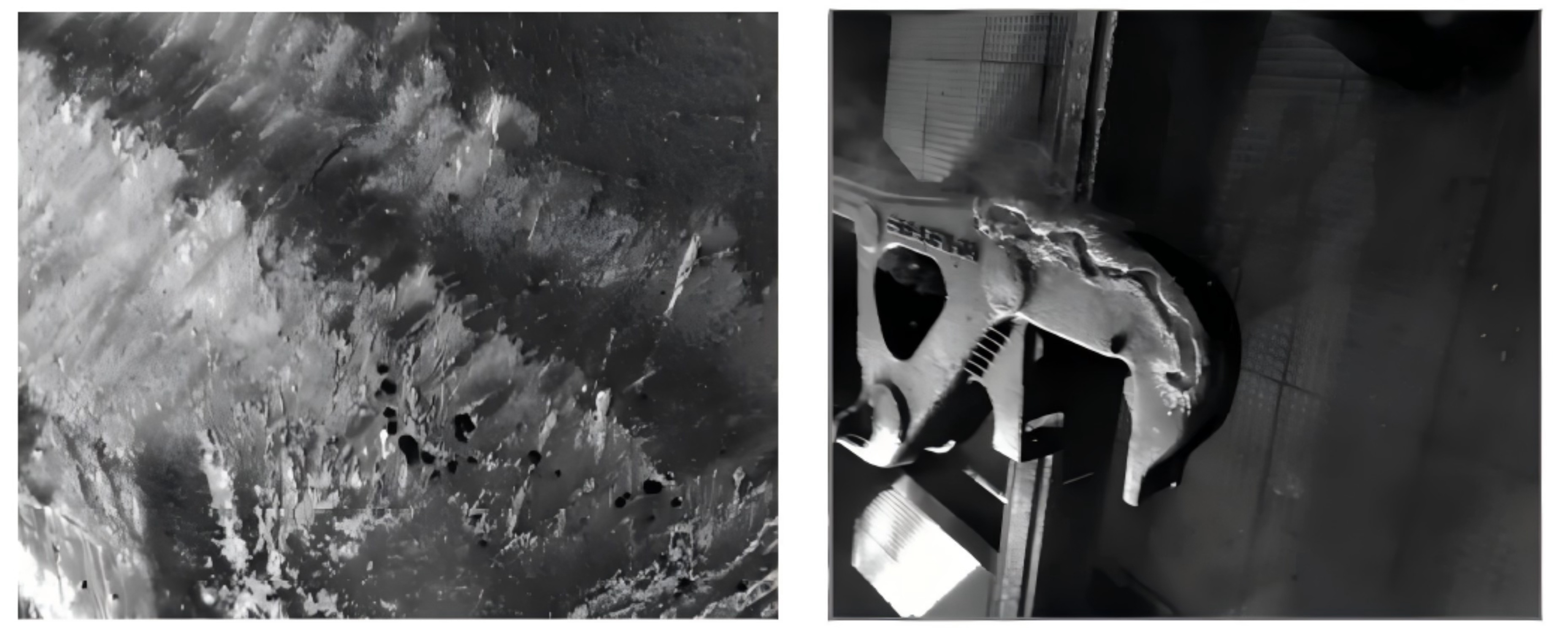
2.Influence of Molding Sand Binder on Steel Casting Quality and Dosage Control
Pure raw sand has no forming strength and cannot be used for direct molding. Binders must be added for mixing and reaction to endow molds and cores with sufficient strength and structural stability throughout molding, coring and pouring processes. Common binders in the industry include clay binder, oil binder and furan resin binder. These binders differ greatly in curing mechanism, performance characteristics and application scenarios, and shall be selected reasonably according to production technologies and casting quality requirements. The selection, dosage proportion and mixing process of binders directly determine mold strength, forming effect and shake-out collapsibility, which have a significant impact on casting forming quality and subsequent cleaning difficulty.
The dosage of binder is the key point of on-site process control, and improper dosage will directly cause various casting defects. Insufficient binder addition leads to inadequate curing, low strength and slow hardening speed of molding sand, which easily causes mold collapse and sand deformation, further resulting in uneven wall thickness, sand holes and casting deformation, and even casting scrap in severe cases. Excessive binder addition can temporarily improve mold strength, but it will increase organic residues in molding sand, raise the loss on ignition and high-temperature gas generation, and greatly increase the risk of pores and slag inclusion. In addition, it will reduce core collapsibility, increase the cleaning difficulty of casting inner cavities, raise labor and material costs, and cause resource waste.
Therefore, binder control shall follow the principle of appropriate adaptation. On the premise of meeting the requirements of mold and core forming strength, storage stability and pouring conditions, the binder dosage should be minimized to effectively balance casting quality, production efficiency and production cost, and reduce binder-induced casting defects from the source of the process.
3.Influence of Casting Coating on Steel Casting Quality and Parameter Control
Steel castings are poured at a high temperature, and ordinary silica sand cannot match the high-temperature working conditions due to insufficient refractoriness. Direct contact between molten steel and molds will cause sintering and vitrification of molding sand, leading to serious chemical sand adhesion. Coating special casting paint on the surfaces of cavities and cores is a key process to isolate molten steel from molding sand, improve casting surface quality and eliminate sand adhesion defects.
Casting coating is mainly composed of refractory aggregate, carrier, suspending agent, binder and functional additives. As the core functional component, refractory aggregate can effectively improve the refractoriness and high-temperature stability of the coating, isolate the chemical reaction between molten steel and molding sand, and prevent casting defects such as sand adhesion and inclusion from the source. The performance of casting coating is divided into physical performance, technological performance and working performance. On-site key control indexes include density, Baume degree, coating thickness, viscosity and drying crack resistance.
The density of coating directly reflects the solid content, which has a great impact on construction effect and protection quality. If the density is too low, the refractory components in the coating are insufficient, resulting in poor anti-flowing performance, failure to form a uniform and effective protective layer, and easy shrinkage cracking and falling off after drying, which greatly reduces the protective effect. If the density is too high, the coating viscosity is high with shallow penetration depth. The thick coating after brushing has poor leveling performance and is prone to accumulation. Uneven internal and external heating during drying will cause coating cracking and further induce casting surface defects.
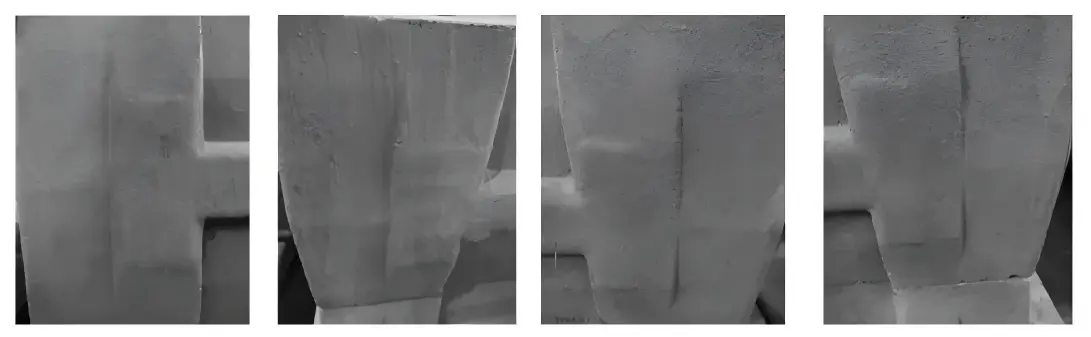
Production practice proves that selecting coating with appropriate density and viscosity and standardizing the brushing process and coating thickness can produce castings with smooth and flat surfaces without sagging, sand adhesion and inclusion. In daily production, it is necessary to regularly monitor the core performance parameters of coatings and unify construction standards to ensure stable and reliable coating protection effect.
4.Conclusions
The steel casting forming process is complex with numerous quality influencing factors. Parameter fluctuation, unreasonable proportioning and non-standard operation of molding materials including molding sand, binders and coatings will all affect the final quality of castings, and most casting defects are caused by the combined effect of multiple factors. By sorting out the influence rules of the three types of core molding materials, this paper draws the following conclusions:
The fine particle content and loss on ignition of reclaimed sand are the core indexes of molding sand control. Excessively high loss on ignition will greatly increase the gas generation of molding sand and induce casting pores. Optimizing the reclaimed sand treatment process regularly and dynamically adjusting the proportion of new and reclaimed sand according to working conditions are key means to stabilize molding sand performance and reduce pore defects.
The dosage of binders requires precise control and adaptive adjustment. Insufficient binder addition leads to inadequate mold strength and poor curing, causing defects such as sand holes, casting deformation and uneven wall thickness. Excessive addition not only wastes materials and increases production costs, but also raises the loss on ignition and gas generation of molding sand, aggravating the risk of pores and slag inclusion. Therefore, the optimal addition proportion must be strictly controlled on the premise of meeting mold service strength.
Coating performance parameters directly determine the surface quality of castings. Precise control of coating density, Baume degree, viscosity and coating thickness, as well as standardized brushing process, can effectively eliminate defects such as sand adhesion, inclusion and surface cracking, which is the core link to ensure the appearance quality of castings.
Steel casting quality control is systematic and comprehensive, and the same defect may be caused by multiple material or process problems. In production, a full-process material detection and process control system shall be established to comprehensively evaluate multiple factors such as material performance, environmental conditions and operation processes, accurately locate defect causes, and continuously optimize improvement schemes. This can steadily improve the quality of steel castings and realize the production goals of quality improvement, cost reduction and efficiency enhancement for enterprises.