



Master Flow Coating Technology: Process Requirements and Core Standards for Special Coatings
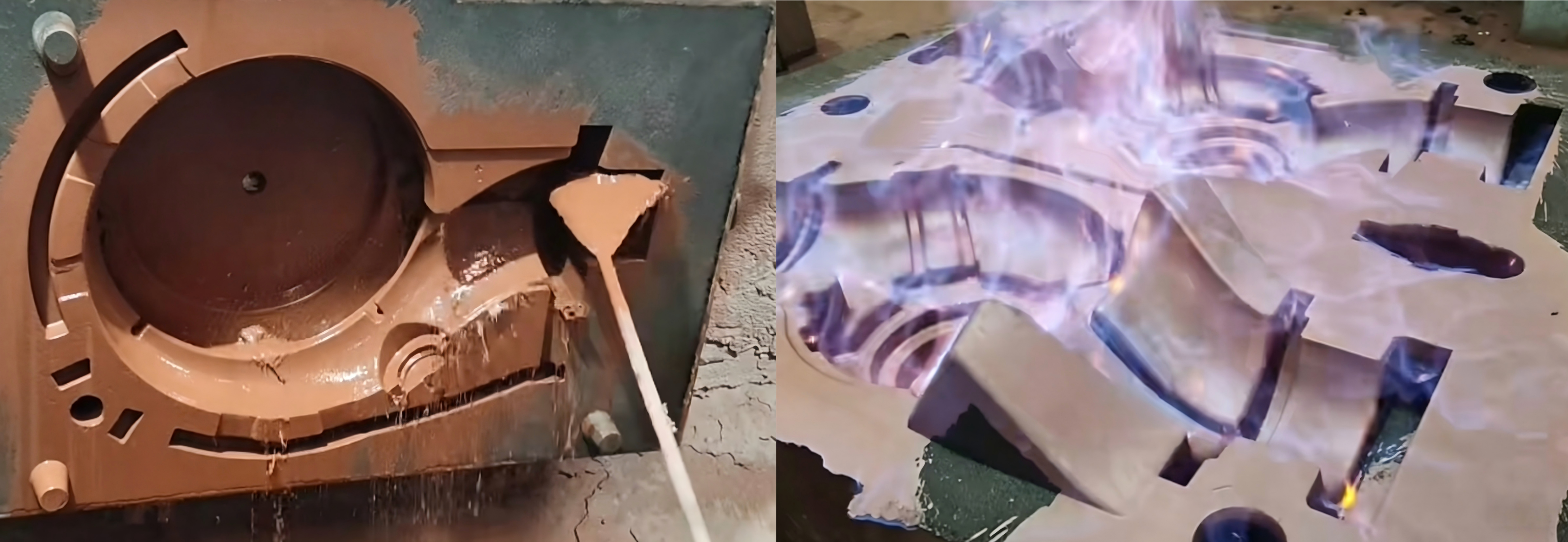
2026-04-24 09:28Flow coating is an efficient application method for casting coatings. With the help of a coating pump, the coating is delivered at a certain pressure and flow rate, then sprayed and poured onto the surface of sand molds and cores through a special flow coating gun. The coating can quickly and evenly cover the entire mold surface. Excess coating flows back to the coating tank through the recovery tank for recycling and reuse, which is now widely applied in the production of various castings.
Compared with brush coating and spray coating, flow coating is less affected by manual operation and delivers consistent coating quality. The coating thickness on vertical and horizontal surfaces is uniform without brush marks. It features high coating efficiency and simple operation, supporting mechanized and automatic production as well as manual operation for small-batch and single-piece production. It is uniquely advantageous for coating molds and cores with deep or complex cavities, which cannot be achieved by traditional coating methods. In addition, the recyclable use of flow coating materials greatly reduces waste and delivers excellent economic benefits.
1. Key Quality Control Points for Flow Coating
To achieve ideal flow coating results, the following critical factors must be controlled:
High-quality molds and cores;
Special flow coating paint;
Pre-treatment of sand molds and cores (sand blowing, repairing, pre-coating, etc.);
Reasonable control of process parameters including Baume degree, density, viscosity and coating thickness;
Professional flow coating machines;
Standardized flow coating operation.
Multiple brushing operations can fill uneven and rough mold surfaces, while flow coating is a one-time coating method with a relatively thin film, which cannot cover rough mold surfaces. Therefore, it puts forward high requirements on the surface quality of casting molds. Smooth and well-finished molds and cores rely on high-quality molds. Meanwhile, adopting Xinda casting coatings can further optimize the overall coating effect and improve finished casting quality.
Flow coating has special requirements for the rheological properties of coatings, so special flow coating paint is essential. As a professional manufacturer focusing on casting materials, Xinda provides a complete range of customized flow coating coatings suitable for diverse working conditions, fully meeting the core technical indicators of flow coating processes. Ordinary coatings can hardly achieve satisfactory flow coating performance simply by adjusting the Baume degree. In contrast, Xinda flow coating coatings are formulated with professional formulas, featuring stable and outstanding rheological properties to adapt to flow coating operations without complicated adjustment.
The preparation of sand molds and cores is also essential. Scratches, material shortage, rough areas and loose structures on the mold surface shall be repaired with repairing paste and special coatings before flow coating. For areas prone to sand adhesion, Xinda professional pre-treatment coating is recommended for advanced protection. Adopting ultra-fine powder raw materials, Xinda pre-treatment coating has several times higher penetration depth than ordinary coatings. It can effectively block surface pores of sand grains, strengthen molds and cores, and greatly enhance the resistance to molten metal erosion and penetration, effectively reducing casting defects such as sand sticking and peeling.
In addition, flow coating machines shall be equipped with basic functions such as tilting and flipping to ensure sufficient coating flow, stable pressure and uniform stirring. Combined with high-performance Xinda casting coatings, it can form a uniform coating layer and ensure efficient and stable flow coating operation.
2. Performance Characteristics of Flow Coating Paint
The biggest difference between flow coating and other coating methods such as brush coating and dip coating is that the coating must maintain excellent fluidity and leveling performance throughout the whole process to form a smooth and uniform coating film.
Excellent leveling performance to eliminate flow marks automatically;
Long flash-off time and lasting fluidity;
Moderate permeability;
Superior suspension stability even at low Baume degree;
High refractoriness and strong anti-sand adhesion performance;
Good wetting and spreading ability with strong coverage.
The stable operation of the flow coating process relies on standardized preparation, standardized equipment operation and precise parameter control, among which high-quality special flow coating coating is the core factor. Supported by mature formulas and strict production standards, Xinda casting coatings fully meet all performance requirements of flow coating technology. It not only gives full play to the advantages of flow coating such as high efficiency, energy saving and automation, but also steadily improves mold surface quality, reduces casting defect rates and production costs. Xinda provides reliable casting material support and comprehensive coating solutions for large-scale and high-quality production of foundry enterprises.