



Complete Application Guide for Mold & Core Coatings: Full Practical Guide to Casting Molding
2026-06-09 13:30During foundry production, the surface quality of the working faces of sand molds and cores that come into direct contact with molten metal exerts a decisive impact on casting quality. Coating the surfaces of molds or cores with refractory coatings is a cost-effective and highly efficient method to upgrade casting surface finish. During pouring, the coating layer forms a barrier between molten metal and the mold, which regulates and optimizes the contact conditions as well as high-temperature interfacial reactions between molten metal and the sand mold/core, thus preventing a wide range of casting defects. In recent years, with increasingly stringent requirements placed on casting quality, manufacturers both domestically and internationally have attached great importance to the production and application of high-performance foundry coatings.
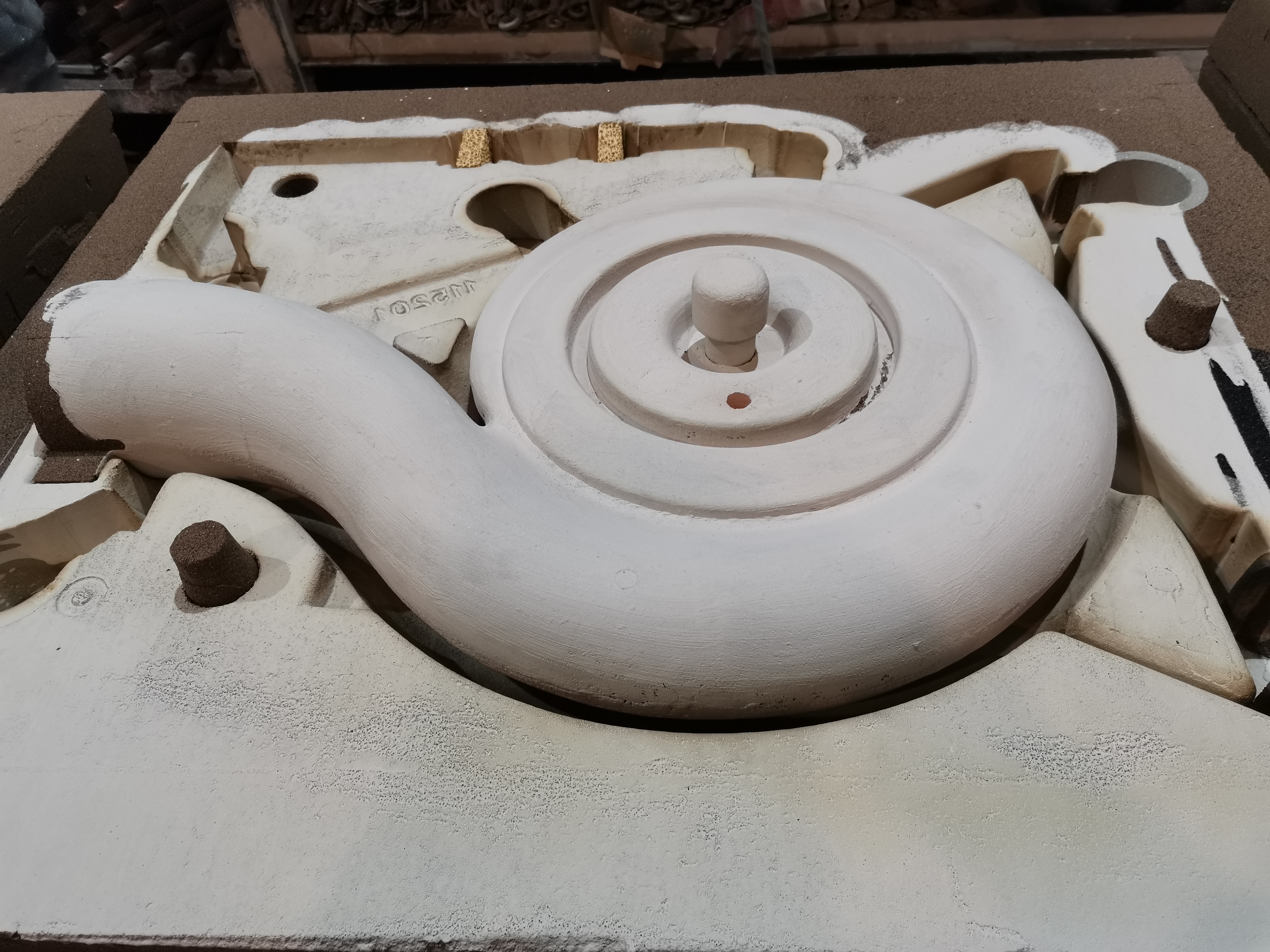
I. Core Functions of Mold Coatings
Coatings are applied to the working surfaces of sand molds and cores that come into contact with molten metal. They isolate molten metal from the sand substrate, comprehensively improving casting quality and cutting production costs via six core functions:
1. Improve casting surface finish and eliminate mechanical burn-on
Uncoated castings feature a surface roughness of Ra 25~50 μm, while a qualified coating can reduce it to Ra 3.2~6.3 μm and boost casting dimensional accuracy simultaneously.
2. Resist high-temperature chemical reactions to prevent chemical burn-on
For heavy-section castings poured at high temperatures, the coating’s excellent high-temperature chemical stability blocks chemical reactions between molten metal and molding sand, avoiding hard-to-clean burn-on layers.
3. Enhance mold surface strength to reduce sand inclusion, metal wash and sand hole defects
For molds with low surface strength such as green clay sand, collapsible water glass sand and organic resin sand, the refractory, high-strength coating layer resists erosion by molten metal and broadens the applicable temperature range of organic binders.
4. Regulate cooling rate to avoid shrinkage cavities, shrinkage porosity and cracks
By switching refractory powders of different thermal conductivities and adjusting coating thickness, the heat transfer rate of the mold is modified to balance casting solidification and eliminate shrinkage and hot cracking defects.
5. Block harmful elements to prevent pinholes, carburization, sulfur pickup and poor nodularity
Steel castings produced with furan resin sand tend to develop subcutaneous pinholes; low-carbon stainless steel suffers carburization and sulfur pickup; ductile iron may exhibit localized poor graphite nodularity. Dense sintered coatings prevent N, S and C elements from migrating from the sand mold into molten metal.
6. Customize the microstructure and performance of casting surfaces
Insulating/chill special coatings: Adjust cooling and crystallization speeds to form chilled or inverse chilled surface layers for targeted surface hardness.
Homologous metal powder additives: Act as crystallization nuclei to refine casting grains.
Low-melting alloy powder additives: Enable surface alloying via high-temperature liquid diffusion.
High-melting wear-resistant powder additives: Embedded in casting surfaces to deliver specialized properties such as enhanced wear resistance.
Fettling accounts for approximately 30% of total casting production costs. Coatings reduce fettling expenses by over 10%, while coating and application costs only make up 5% of total production costs. The overall production cost saving exceeds 5%. Additional benefits include drastically lower scrap rates and improved mechanical properties of castings.
II. Key Performance Indicators of Coatings
1.Physical & Chemical Properties (Intrinsic Base Characteristics)
Density: Mass per unit volume. Density is used on production lines to quickly judge coating consistency, which varies with solvent addition.
Suspension Stability: Resistance to powder sedimentation and layer separation. Test standard: No severe sedimentation after 24 hours standing for water-based coatings, and 8 hours standing for alcohol-based coatings. Poor suspension stability causes uneven coating thickness and difficult application.
Viscosity: Internal flow resistance of the coating. Excessively high viscosity leads to poor fluidity, laborious brushing, coating buildup and insufficient penetration into the sand mold. Overly low viscosity results in easy powder sedimentation and overly thin protective coatings.
2.Processing & Application Properties
Wetting & Penetration:The coating must wet the sand mold surface to penetrate the substrate and achieve strong coating adhesion. Poor wetting causes failed coating coverage and peeling; surfactants may be added to optimize wetting and penetration.
Brushability & Leveling:Brushability means the coating glides smoothly without dragging during brushing. The wet coating resists cracking and splitting, and naturally levels to form a smooth, uniform surface.
3.Service Performance During Pouring
Coating Strength & Adhesion: The coating shall not shed powder, peel or flake during mold handling, mold closing and erosion by high-temperature molten metal.
Thermal Shock Crack Resistance: No shrinkage cracks form during air or oven drying, and no cracking occurs under instantaneous thermal shock from molten metal to avoid sand hole defects caused by coating fragments.
Anti-Burn-On Performance: The core indicator of coatings. Coatings must match casting material, section thickness and pouring temperature to fully eliminate all types of burn-on defects.
III. Coating Selection by Mold Type
| Mold Property | Recommended Coating Type |
|---|---|
| Green clay sand mold | Alcohol-based coatings, high-solids water-based coatings |
| Oven-dried / surface-dried clay sand, water glass sand, resin sand and oil sand molds | Water-based coatings only |
| CO₂-hardened and self-set water glass sand molds | Alcohol-based coatings, high-solids water-based coatings |
| Gas-hardened and self-set resin sand molds | Alcohol-based coatings, high-solids water-based coatings |
IV. Standard On-Site Operating Specifications for Coating Application
1. Agitation, Dilution and Viscosity Adjustment
Thoroughly stir the entire coating bucket before use. Dilute with solvent (water / alcohol) to target viscosity based on application method and mold strength:
Low viscosity (thinner dilution): For spraying, dipping, flow coating; molds with low permeability and weak surface strength.
High viscosity (minimal dilution, thicker consistency): For manual brushing; dense molds with high surface strength.
2. Coating Thickness Control
Standard castings: 0.15~1 mm coating thickness; heavy large castings: 1~2 mm. Use the lower limit for iron castings and upper limit for steel and copper castings.
Maximum single-coat thickness: ≤0.3 mm. Multiple coats are required for thick layers:
Water-based coatings: Apply the next coat only after the first coat air-dries slightly.
Alcohol-based coatings: Reapply only after the first coat is fully flame-dried and cooled to room temperature.
Principle: Minimize coating thickness while meeting anti-burn-on requirements to save raw materials and improve thermal shock crack resistance.
3. Coating Drying & Curing Process
Water-Based Coatings:
Application timing: Coat water glass sand before oven drying / surface drying. Coat thermosetting resin sand and oil sand post-drying, utilizing residual heat for drying or secondary oven drying. Coating can be applied before or after drying for oven-dried / surface-dried clay molds and cores.
Drying temperature range: 100~450 ℃. Avoid prolonged localized flame heating to prevent over-burning and failure of sand binders.
Alcohol-Based Coatings:
Ignite and dry the coating immediately after application to prevent excessive solvent penetration and volatile loss.
If delayed application leads to incomplete combustion, mist a small amount of alcohol over the coating to support full burning. For large molds, perform sectional local flame drying.
4. Coating Storage Requirements
Water-based coatings: Store away from direct sunlight, protect from freezing in winter to prevent powder sedimentation and deterioration.
Alcohol-based coatings: Keep fully sealed during storage; implement strict fire prevention and waterproof measures to eliminate safety hazards.
5. Precondition Requirements (Prerequisite for Optimal Coating Performance)
The sand mold/core substrate must feature a smooth surface, uniform compaction and sufficient overall strength. Loose sand or severely uneven surfaces easily cause coating cracking, peeling and flaking even with high-performance coatings.
Xinda mold & core coatings represent low-cost, high-return auxiliary materials for foundry operations. Our full range of water-based and alcohol-based coatings can be accurately matched to diverse molding processes. To achieve optimal casting results, strictly control four critical operation links: stirring & dilution, coating thickness, drying & curing, and standardized storage. With superior refractory performance, Xinda coatings fundamentally eliminate typical casting defects such as burn-on, pinholes, sand holes and thermal cracks, drastically upgrading finished casting surface quality while slashing fettling labor costs and scrap loss rates for foundries worldwide.